
Design
A handmade bowl is not just a bowl. It is a record of a person's hands and an argument for the value of the made thing.
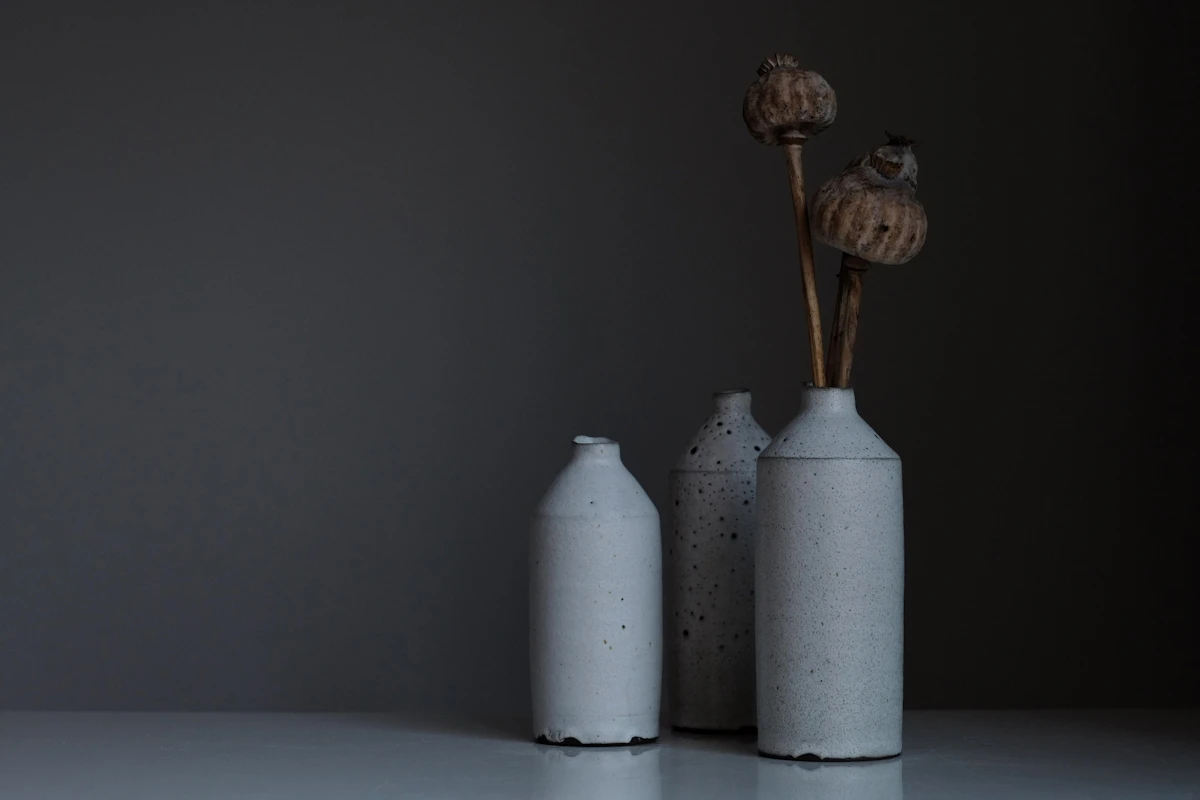
I started collecting ceramics slowly and without intention, the way most good collections begin. A cup from a potter's studio in Kyoto that I couldn't put down. A bowl from a market in Portugal that was the right grey-green at exactly the right moment. A vase from a maker in Brooklyn whose work I'd followed online for a year before I finally bought something. None of these purchases felt like collecting at the time. They felt like the only possible response to something beautiful.

What I understand now, after years of living with handmade ceramics, is that they function differently from other objects in a home. They are not decorative in the way a print or a cushion is decorative — something placed somewhere to improve the look of a surface. They are present in a more active way. You use them. Every morning, the cup. Every dinner, the bowl. The relationship is ongoing and physical, and over time the object becomes both itself and the record of all the times you've held it.
Weight is the first indicator. A handmade ceramic should feel substantial without feeling heavy — there is a specific gravity that distinguishes work thrown on a wheel from work cast in a mould, and once you can feel it you cannot unfeel it. The interior of a bowl should be smooth enough to be functional but show the maker's touch; total smoothness is a sign of machine finishing.
The handmade object carries time in a way that the manufactured object does not. You can feel it. This is not sentimentality; it is physics.

Buy from makers whose work you can follow over time — a ceramicist with a practice is different from one making objects for the giftware market. Look at Instagram, at ceramic fairs, at the studio sales that happen twice a year in every city worth living in. When you find something that stops you, buy it. You will not regret buying the beautiful thing; you will regret not buying it.
Ceramics exist on a spectrum from industrial production to one-of-a-kind studio work, and price reflects this in a way that is largely rational. A handmade bowl from a studio potter represents weeks of iteration — the clay body mixed or purchased, the form thrown and trimmed, the surface treated, the firing managed, the cooling monitored. Each stage can fail. What survives to be sold carries the cost of what did not. Understanding this does not mean you must spend more than you can afford. It means the price makes sense when you know what you are paying for.
The marks that distinguish handmade from industrial production are legible once you know what to look for. Slight irregularities in the rim of a handthrown piece — the gentle undulation that a mould cannot reproduce. The variation in glaze coverage, thicker in some areas, thinner at the edges where the glaze drains during firing. The foot ring — the unglazed circle on the base — that is trimmed by hand and shows the maker's decisions rather than a machine's consistency. These are not flaws. They are the record of making, and they are what makes a handmade piece worthwhile at forty years of age in a way that an industrially produced one is not.
The ceramics that tend to hold their character longest — to look better rather than merely older — are those made with restraint. A glaze that is one colour, or two in conversation, rather than five competing. A form that is resolved rather than decorated. The best studio ceramics are often the ones that seem simplest: a bowl that is just a bowl, made so well that it is visibly the best version of the thing it is. The Japanese aesthetic of wabi — the beauty of things that are imperfect and incomplete — identifies something that Western pottery has been learning from for a century.
The British studio pottery tradition is stronger than it is recognised to be outside the ceramics world. Leach Pottery in St Ives, founded by Bernard Leach in 1920, is still producing work in the tradition he established — functional stoneware with an East-West sensibility that feels entirely contemporary despite nearly a century of continuity. The studio sells work directly from its shop and the prices are considerably more accessible than the significance of the pottery would suggest.
For contemporary studio work, the ceramics fairs held annually at Ceramic Art London and the Collect fair at the Barbican present the widest range of serious British potters in one place. Visiting without a budget in mind, simply to look and handle, is the most useful ceramics education available — you learn quickly which makers' work has the weight and surface quality that justifies the price and which is trading on aesthetics without the underlying craft to support it.
For the piece you save for rather than the piece you buy casually: ceramics by Jennifer Lee, Hitomi Hosono, or Akiko Hirai represent the standard of contemporary British studio pottery at its peak. A single piece by any of them — a bowl, a small vessel, a plate used daily — is an object that will be worth saving for. Used well, it becomes part of the daily ritual of eating and drinking, which is where ceramics belong. The studio piece on the daily table is more itself than the studio piece on the display shelf. Let it earn its place by being used.
※ End of article


