
Design
You can redesign a room without buying anything. Start by asking what the room is actually for.

Most interior decisions are made in the wrong order. We see something we want — a sofa, a lamp, a rug — and we find a place for it. We start with the object and work backwards to the space, which is why rooms end up feeling like collections of nice things rather than coherent places.

The one rule worth following, before you buy anything, is this: decide what the room is actually for. Not what it is supposed to be for, or what every room of this type is typically used for, but what you — specifically, with your specific life — actually use or want to use it for.
A living room in a house where the television is the primary activity has different furniture requirements than a living room used primarily for conversation, or one used primarily for reading alone. Getting this right means nothing else in the room will fight against itself. Getting it wrong means you will spend money rearranging things indefinitely and never arrive at a room that feels settled.
The most beautiful room is the one that knows what it is. The most uncomfortable room is the one that is trying to be several things at once.
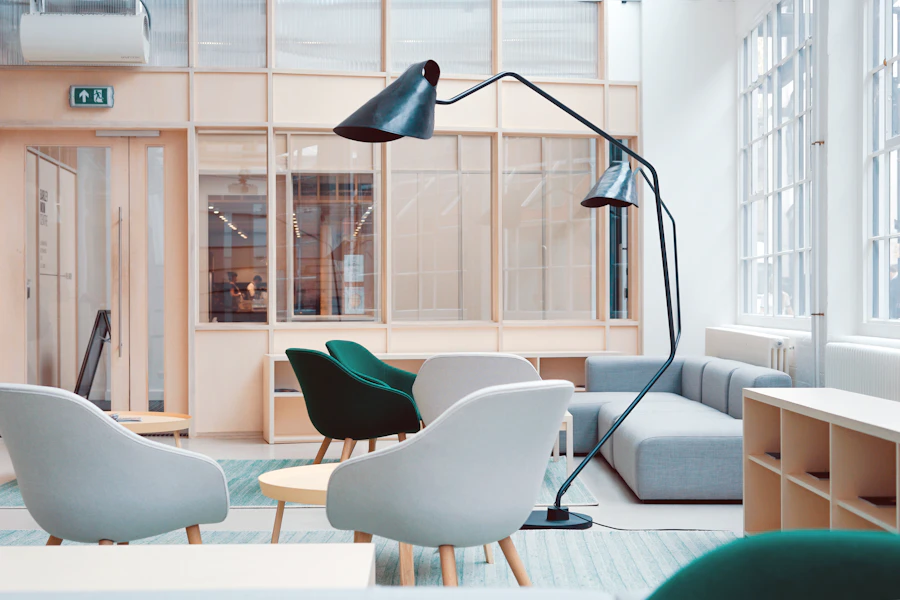
Once you know what the room is for, the furniture follows logically. If it is for conversation, you need seating that faces other seating. If it is for reading, you need light at the right angle and a chair the right height. If it is for nothing in particular and you want it to be a room for the pleasure of the room itself, you need beauty and order and a few objects that deserve sustained attention.
The things that almost always improve a room, regardless of what it is for: fewer things, larger pieces of furniture (counterintuitively), at least one item chosen purely for beauty rather than function, and natural light from more than one angle if possible. Remove something before you add something. The room will tell you what it needs next, once it can be heard.
The one-room rule changes character depending on the room it is applied to. In a bedroom the resolution is clear: the bedroom is for sleeping. Not for working, not for watching things, not for the low-level administrative task completion that colonises every available surface. The removal of the desk, the television, the charging station for multiple devices — these are not deprivations. They are the conditions under which a bedroom becomes actually restful, which is what it is for.
The living room presents a harder question because it genuinely does several things: conversation, reading, watching, hosting, the evening hour that has no single name. The rule here is not to collapse these into one but to ensure that each function has a space within the room that supports it properly. A reading chair near a lamp. A sofa oriented for conversation rather than toward the screen. A surface for drinks near the seating. The functions can coexist; they simply need to coexist intentionally rather than by accumulation.
In a kitchen the rule becomes practical rather than philosophical. The kitchen is for cooking. Storage and display either serve the cooking or they complicate it. The spice rack that requires moving three things to reach one is not in service of cooking. The knife block positioned correctly near the chopping board is. Apply this logic to every surface and the kitchen that results will be one where cooking is a pleasure rather than a navigation problem.
Every room that is clarified produces overflow — things that were there and are now clearly in the wrong place. Some of this is genuinely homeless: the object that does not belong anywhere because no room has been designated for its function. This is useful information. Either create a home for it or accept that the home does not need it.
The study or home office absorbs much of the overflow correctly — the administrative, the productive, the things that belong to work rather than rest. This is why a home office matters even in a small space: it contains the work so the rest of the home can be not-work. Even a corner of a room, divided by a curtain or a bookshelf, serves this function if the division is consistent. The rule requires not physical walls but psychological ones.
Hallways and transitional spaces bear the load the one-room rule generates. A hall table with one drawer absorbs keys, post, the small accumulation of arrival. A coat hook at the right height means the coat does not travel to the bedroom. Transitional spaces designed rather than left to chance create a decompression zone between the outside world and the interior — a brief pause that makes every other room function better simply by existing.
※ End of article


