
Travel
The Paris most people visit is exhausting: queues, monuments, the pressure to see everything. The Paris worth returning to is the one you find when you stop trying to see anything at all.

I have been to Paris twelve times and the trip that taught me most about the city was the one where I did almost nothing. Four days, one neighbourhood, two restaurants booked in advance, no plan for the hours in between. I walked. I sat. I read in a garden. I ate a croque-monsieur standing at a zinc bar counter. I went back to the same café three mornings in a row and was given my coffee before I ordered it on the third. That was the Paris I had been looking for every previous visit.
The city is not best understood through monuments, though the monuments are extraordinary. It is best understood through the rhythm of its days — the way everything closes at certain hours and opens at others, the way the market sets up and dismantles, the way an arrondissement changes character between morning and evening. None of this can be accessed on a four-stop highlights tour.
This is the fundamental principle of slow Paris. Not two, not three. One. Stay there. Eat there for breakfast. Walk its streets until you know which boulangerie has the best croissant (it is always a matter of fierce local opinion and the locals are always right) and where the good market stall is and which café has the right kind of morning light.
The 11th is my neighbourhood. Others swear by the 18th, the Marais, Montparnasse. The particular choice matters less than the commitment to it. You are not trying to understand Paris in four days. You are trying to understand one small piece of it, which is a different and more achievable project.
Paris does not reveal itself to people in a hurry. It rewards return, patience, and the willingness to sit at a table for two hours doing nothing important.
Breakfast at the café counter, standing, with a coffee and a croissant. Walking until lunch. Lunch at a table — a proper lunch, two courses, wine if you want it, forty-five minutes minimum. The two hours after lunch that Paris uses for its own purposes and that visitors waste by trying to be efficient. A patisserie stop at around four. A bookshop. The evening walk. Dinner at eight, not before, and not at a restaurant that advertises menus in three languages at the door.

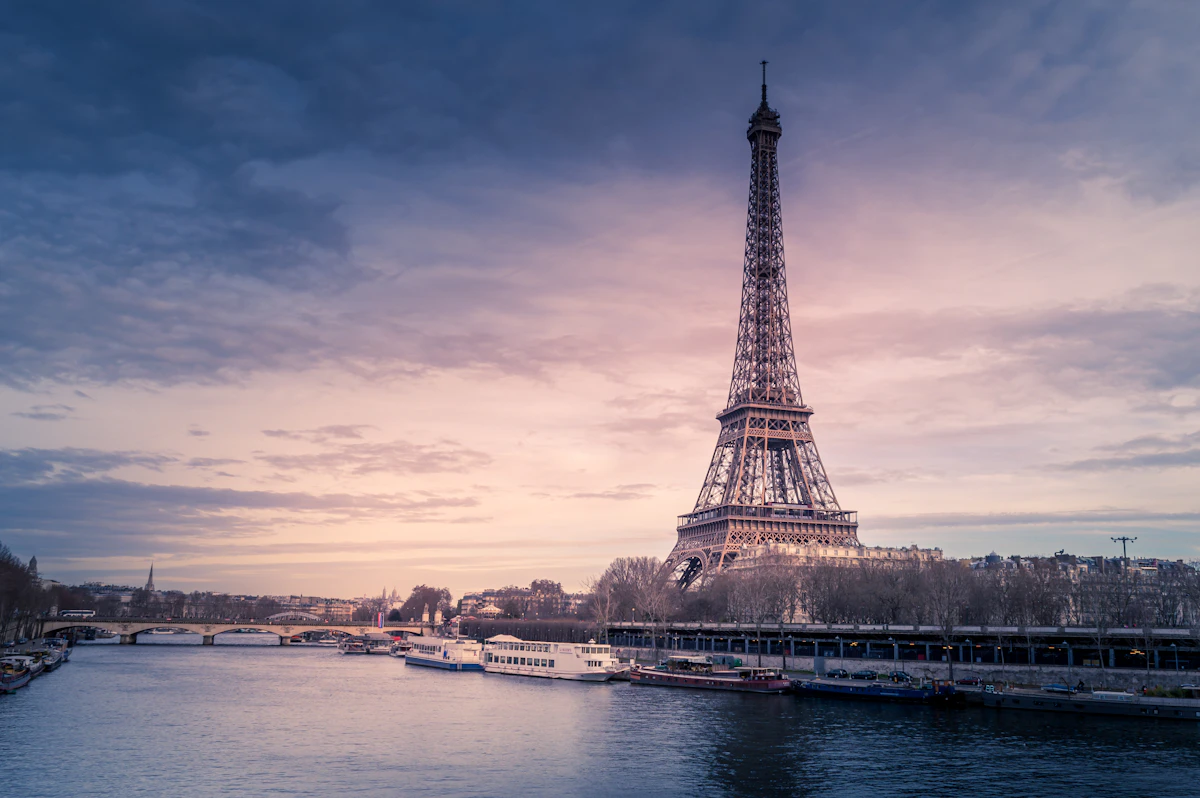
The Eiffel Tower, probably, except in passing. The Louvre, unless you want to go. Versailles. Most of the things in the guidebook. You will not miss them the way you thought you would. What you will find instead is that you have been to Paris — not to a concentrated version of its most famous moments, but to the actual city, which is slower and stranger and more particular than any photograph of it suggests.
And you will go back. Everyone who sees Paris slowly goes back. Because you will have only seen one neighbourhood, and there are twenty, and you will need to understand them all.
Shakespeare and Company on the Left Bank is the most famous English-language bookshop in Paris and worth visiting once for its extraordinary atmosphere and its history as the centre of expatriate literary Paris. It is not the bookshop for browsing. The bookshop for browsing is Librairie Galignani on the rue de Rivoli, which has been selling books in English and French since 1800 and has the quiet, considered organisation of a shop run by people who read. The Red Wheelbarrow in the Marais is a more intimate English-language bookshop with the specific quality of a place where the person behind the counter has read most of what they are selling.
The Marché d'Aligre, in the 12th arrondissement, is the best market in Paris by the metric of authenticity — meaning that it is attended primarily by people who live in the neighbourhood rather than people who read about it. The covered hall (the Marché Beauvau) sells cheese, charcuterie, and fish at prices that remind you how much of Paris has preserved a relationship to affordable food that central London has entirely lost. The outdoor market around it sells fruit, vegetables, and — on weekends — a small but good flea market element. Arrive at eight. Leave at noon. The journey from the 1st arrondissement is fifteen minutes by metro and the arrival at Aligre is an arrival at a Paris that has no interest in performing itself for you.
The Marché aux Puces de Saint-Ouen, the large flea market at the northern edge of Paris, is enormous, inconsistent, and worth a Saturday morning. The Marché Biron and Marché Dauphine sections within it contain serious antique dealers. The surrounding stalls contain everything from overpriced junk to the kind of overlooked object that repays attention and knowledge. Go without a specific intention. Walk slowly. The markets that reward you are always the ones you entered without a list.
The Louvre is one of the great institutions of human culture and also, for the purposes of slow Paris, the wrong museum. It is too large to see well in a day, too crowded in most seasons to experience contemplatively, and too comprehensive to be selective about. The museums that reward the slow Paris approach are the ones where a room takes thirty minutes rather than three, where the collection has a coherence that allows genuine engagement rather than the processed experience of landmark after landmark.
The Musée de l'Orangerie houses the Water Lilies rooms — the two oval rooms that Monet designed specifically for his large-scale paintings — and is among the most profound experiences available in Paris to someone willing to sit in those rooms for twenty minutes rather than photograph them and leave. The paintings were designed to be inhabited rather than observed. The deliberate oval architecture, the north-facing skylights, the lack of a horizon line that forces the eye into the surface of the water: these were Monet's aesthetic choices, and they only work when you give them time.
The Musée Rodin occupies the sculptor's former studio and garden in the 7th arrondissement and allows you to see The Thinker, The Kiss, and The Burghers of Calais in the outdoor setting Rodin intended. The sculpture garden alone is worth the admission. Bring a book. Sit under the roses in the garden for an hour with Rodin's bronze figures around you and the city of Paris carrying on its business over the wall. This is Paris being generous with its beauty in the way that only Paris quite manages.
※ End of article

※ More in Travel

